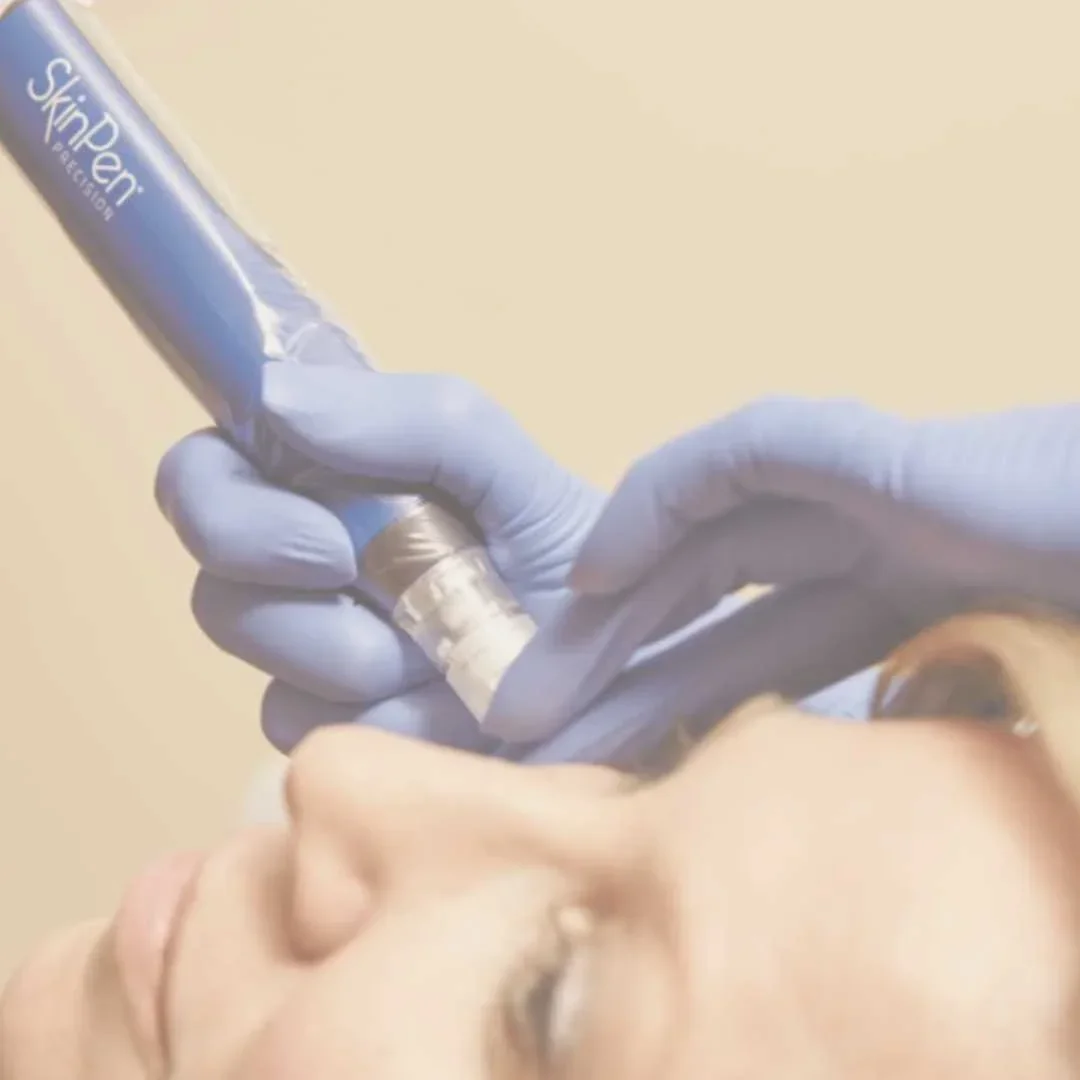
Healthy skin is about more than one concern. Uneven texture, enlarged pores, dullness, pigmentation and scarring often show up together. SkinPen microneedling treats them all in one treatment, which is why it's one of the most popular treatments at W Health Clinic in Harrogate and York.
This guide explains how SkinPen works, what it can treat, what to expect on the day and how many sessions you're likely to need. All SkinPen treatments at W Health Clinic are carried out or overseen by Dr Amy Watson, an aesthetic doctor with more than 13 years of experience.
What is SkinPen microneedling?
SkinPen is a medical-grade microneedling device. It was the first microneedling device to be cleared by the US FDA. It uses a sterile, single-use cartridge of fine needles to make thousands of tiny, controlled channels in the skin.
These micro-channels trigger the skin's natural wound-healing response. Your body produces new collagen and elastin, the proteins that keep skin firm, smooth and resilient. This process is known as collagen induction therapy.
SkinPen doesn't add anything artificial to your skin. It helps your skin repair and renew itself, so results look natural and keep improving for weeks after each session.
How does SkinPen differ from at-home dermarollers?
Precision: SkinPen's needle depth can be adjusted for each area of the face and body, so every zone gets the right treatment.
Hygiene: each treatment uses a new sterile, single-use cartridge.
Less trauma: the needles move vertically, rather than rolling, which creates clean channels and helps the skin heal faster.
Medical setting: your treatment is carried out in a clinic, with a full skin assessment beforehand.
What can SkinPen treat?
SkinPen is a great all-round skin treatment because it targets several concerns at once:
Skin texture: smooths rough, uneven or bumpy skin.
Skin tone: evens out patchy, dull or uneven skin tone.
Clarity and radiance: restores a fresh, healthy glow.
Enlarged pores: helps reduce the look of large pores.
Acne scarring: softens rolling and boxcar scars and improves some shallow pitted scars.
Pigmentation: improves the look of sun damage and uneven pigmentation.
Fine lines and wrinkles: supports firmer, plumper skin as collagen builds.
Stretch marks: improves the texture and appearance of stretch marks on the body.
Surgical and traumatic scars: helps scars blend in with the surrounding skin.
Which areas can be treated?
SkinPen is most often used on the face, but it can also treat other areas that show signs of ageing or damage:
Face
Neck
Décolletage (chest)
Hands
Body areas such as the abdomen, thighs, arms and back
Scars
Stretch marks
The neck, chest and hands often age faster than the face, so many patients add one of these to their facial treatment for a more consistent, overall result.
What to Expect from SkinPen at W Health Clinic
1. Consultation: Dr Watson assesses your skin, talks through your goals and your medical history, and makes a treatment plan for you.
2. Preparation: your skin is cleansed and a numbing cream is applied for comfort.
3. Treatment: SkinPen is passed over the skin with a specially formulated glide serum. Most patients describe it as a light vibrating or scratching feeling.
4. Aftercare: a soothing post-treatment product is applied and you'll be given clear aftercare advice to take home.
Session time: the treatment itself usually takes 30 to 45 minutes for the face, plus time for numbing.
Downtime and recovery
SkinPen has minimal downtime. Your skin will look pink, similar to mild sunburn, for 24 to 48 hours. Some patients have slight dryness or flaking for a few days afterwards.
Most people go back to work the next day. We recommend avoiding make-up for 24 hours, and avoiding exercise, saunas and direct sun for 48 to 72 hours. Always wear a high-SPF sunscreen while your skin heals.
How many sessions will I need?
Most patients see a fresh glow within a week. Collagen keeps building for several weeks, so the best results show around 3 months after a course.
Overall skin rejuvenation: a course of 3 sessions, 4 to 6 weeks apart.
Acne scarring, deeper scars or stretch marks: usually 3 to 6 sessions, 4 to 6 weeks apart.
Maintenance: 1 to 2 sessions a year to keep your results.
Dr Watson will recommend the right number of sessions for your skin at your consultation.
Is SkinPen right for me?
SkinPen is suitable for most adults and for all skin types and tones, including darker skin. Unlike some laser treatments, it doesn't rely on heat, so the risk of pigment changes is lower.
SkinPen may not be suitable if you:
are pregnant or breastfeeding
have active acne, cold sores, eczema, psoriasis or a skin infection in the treatment area
have taken isotretinoin (Roaccutane) in the last 6 months
tend to form keloid or raised scars
have a blood-clotting disorder or take blood-thinning medication
are having radiotherapy or chemotherapy
Your full medical history is checked at your consultation, so you'll know whether SkinPen is the right choice before you book a treatment.
Book SkinPen Microneedling in Harrogate and York
At W Health Clinic, every SkinPen treatment starts with a doctor-led consultation, so your plan is safe, personal and designed around your skin goals.
Whether you want smoother texture, fewer visible scars, a more even skin tone or a healthy glow, SkinPen is a natural way to get there.
Book your SkinPen consultation at W Health Clinic in Harrogate or York today. Call us on 01904 373202 or email info@whealthclinic.co.uk.
Frequently Asked Questions
Does SkinPen microneedling hurt? Most patients find it very comfortable. A numbing cream is applied before treatment, and most people feel only a light vibration or scratching sensation.
When will I see results? Most people notice brighter, fresher skin within a week. Collagen keeps building for up to 3 months, so results improve gradually after each session.
How long do SkinPen results last? The new collagen your skin makes is long-lasting. Natural ageing continues, so 1 to 2 maintenance sessions a year help keep your results.
Can SkinPen be combined with other treatments? Yes. SkinPen works well alongside skin boosters, chemical peels and a good home skincare routine. Dr Watson can build a combined plan to suit your skin.
Is SkinPen safe for darker skin tones? Yes. SkinPen doesn't use heat or light, so it's suitable for all skin types and tones when carried out by a trained practitioner.
When is the best time of year for SkinPen? SkinPen can be done all year round. Autumn and winter are especially popular, because there is less sun exposure while your skin heals.